Yet despite continued ecommerce growth, physical retail remains an essential part of the customer journey.
Why? Because the most powerful competitive advantage in retail has never been inventory. It is experience.
The challenge for today’s retailers is combining the convenience customers expect online with the engagement and service that only physical environments can deliver.
Why Customers Still Choose Physical Stores
Consumers increasingly move between online and offline channels without thinking about the difference.
They might:
- Research products online
- Visit a store to see them in person
- Compare prices on their phone
- Complete the purchase in-store
- Arrange home delivery
The store is no longer simply a place to complete a transaction.
It has become part of a larger buying journey.
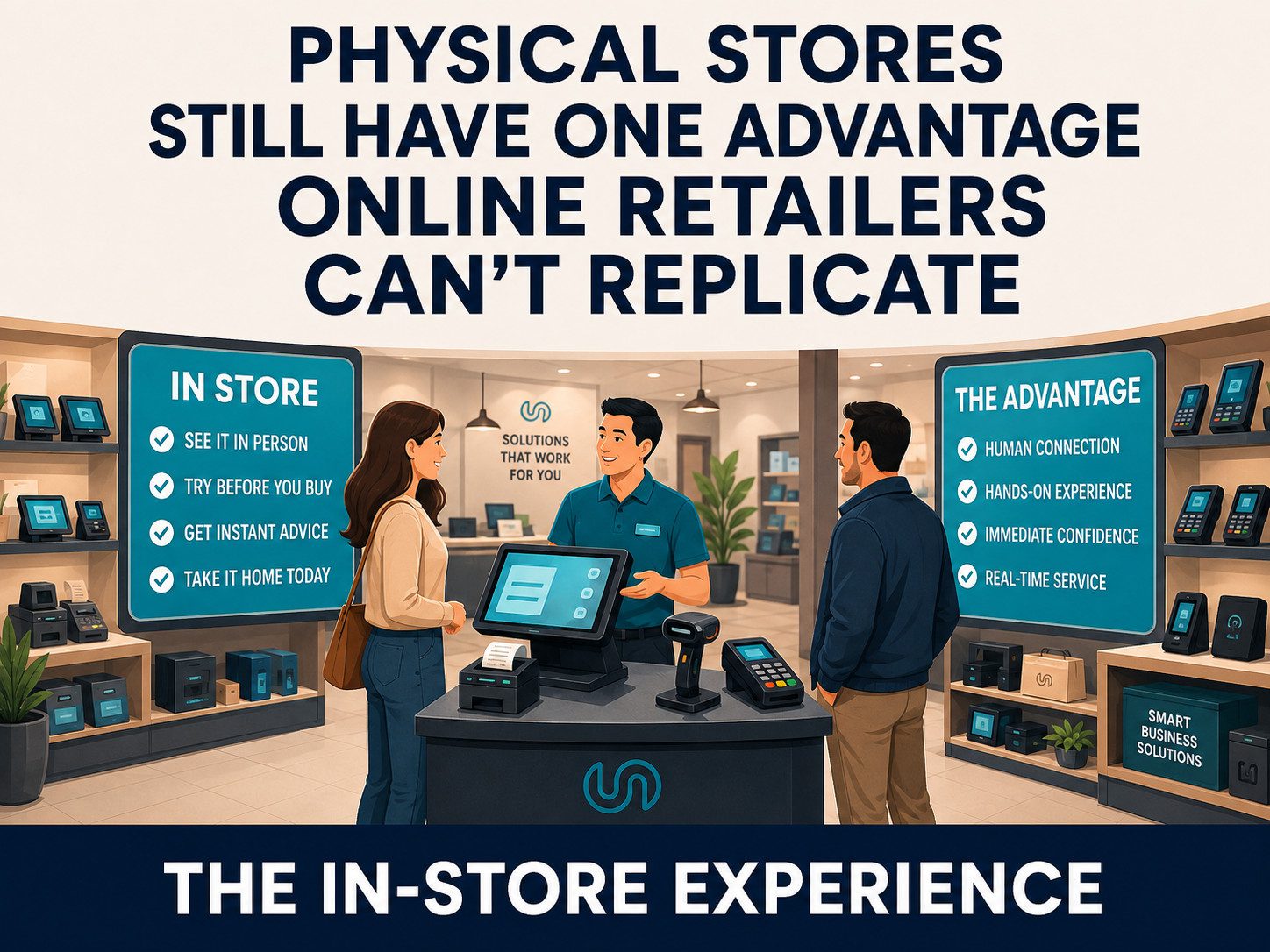
Physical locations give customers something the online world cannot fully replicate:
- Human interaction
- Product demonstrations
- Immediate support
- Instant purchasing satisfaction
- Confidence in buying decisions
The question is not whether physical retail still matters, the question is how retailers maximise these strengths.
The Retailers Winning Today Are Selling Confidence
Customers often enter stores looking for reassurance rather than products, they already know what they want. They have probably researched it online, and what they need from a physical retailer is confidence.
Confidence that:
- They are choosing the right product
- The item meets their expectations
- Expert help is available if required
- The retailer can support them after purchase
This is where modern retail technology becomes increasingly valuable.
Staff equipped with the right systems can spend more time advising customers and less time searching for stock, checking prices or manually solving operational problems.
The Store of the Future Is Connected
One of the biggest frustrations customers experience is inconsistency. A product is available online but not in-store. A promotion is advertised but staff cannot find it. A size is unavailable despite stock existing elsewhere. These are not inventory problems, they are visibility problems.
Connected retail removes these barriers by bringing together:
- Stock information
- Customer data
- Sales insights
- Product availability
- Fulfilment options
Through platforms such as
OpSuite EPOS, retailers can create a single view across their operations, giving staff the information they need to serve customers effectively.
Every Employee Becomes a Sales Opportunity
Retail technology should not simply support transactions, it should enable conversations.
When employees can instantly:
- Check product availability
- Access stock across locations
- Complete sales from anywhere in-store
- Review customer preferences
- Offer alternative fulfilment options
they become far more effective at converting customer interest into revenue.
This improves customer experience while helping retailers maximise every sales opportunity.
Convenience Has Become the New Customer Service
Traditionally, excellent service was defined by friendly, knowledgeable staff.
Today, convenience is just as important.
Customers expect:
- Short queues
- Fast payments
- Click and collect
- Flexible delivery options
- Multiple payment methods
Retailers who remove friction from the buying process often gain a significant competitive advantage.
Modern EPOS systems, payment solutions, self-service technology and connected inventory management all play a role in delivering this convenience.
Physical Stores Are Becoming Brand Experience Centres
Increasingly, stores are evolving beyond their traditional role.
Successful retailers use stores to:
Showcase products – Create immersive environments that help customers explore ranges.
Demonstrate expertise – Offer advice and service that online competitors cannot match.
Strengthen relationships – Build long-term customer loyalty through personalised interactions.
Support omnichannel retail – Act as fulfilment hubs, collection points and customer engagement spaces.
This shift changes how retailers think about investment. Technology is no longer simply an operational expense, it becomes an experience enabler.
The Importance of Reliable Retail Technology
Customer experience is difficult to improve when systems create friction.
Retailers continue to face challenges such as:
- Slow checkouts
- Hardware failures
- Outdated software
- Limited reporting visibility
- Disconnected inventory systems
Investing in reliable
EPOS hardware and software provides benefits beyond operational efficiency. It helps create smoother customer journeys.
At RMS, we work with retailers to deliver:
- Modern EPOS platforms
- Customer-facing technology
- Retail hardware
- Receipt printing solutions
- Payment integrations
- Multi-site visibility
All designed to support better retail experiences.
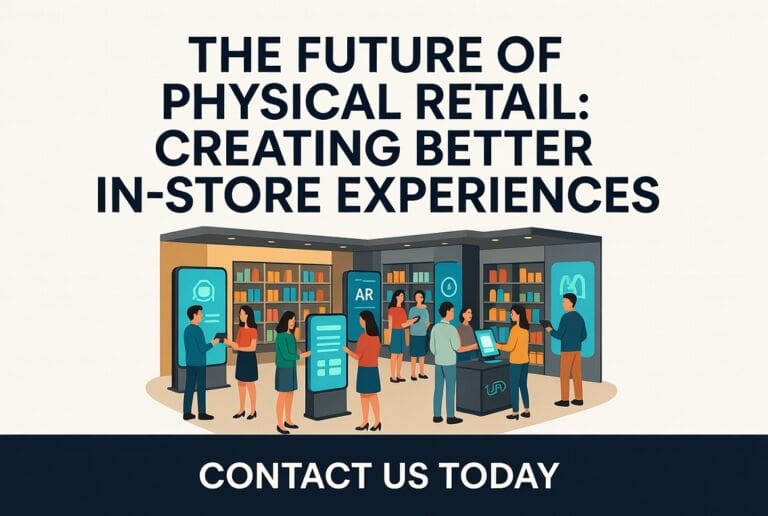
The Future of Physical Retail
Retail is not becoming fully digital, nor is it returning to traditional high street models. Instead, the future lies in combining the best elements of both.
Physical stores remain incredibly powerful environments when supported by the right technology.
The retailers who succeed over the coming years will be those who:
- Create memorable experiences
- Empower employees
- Connect systems and data
- Remove customer friction
- Deliver convenience alongside service
In short, they will focus on making every store visit worthwhile.
Conclusion
The greatest threat to physical retail is not online shopping, it is failing to adapt to changing customer expectations.
Stores that embrace connected technology and customer-focused experiences have a significant opportunity to stand out in an increasingly competitive market.
By combining expert service with modern retail technology, businesses can transform stores from transaction points into destinations customers actively choose to visit.
Ready to Future-Proof Your Retail Operation?
If you’re looking to create a more connected, customer-focused retail environment, RMS can help –
contact us today to discuss your requirement.